Get For Free
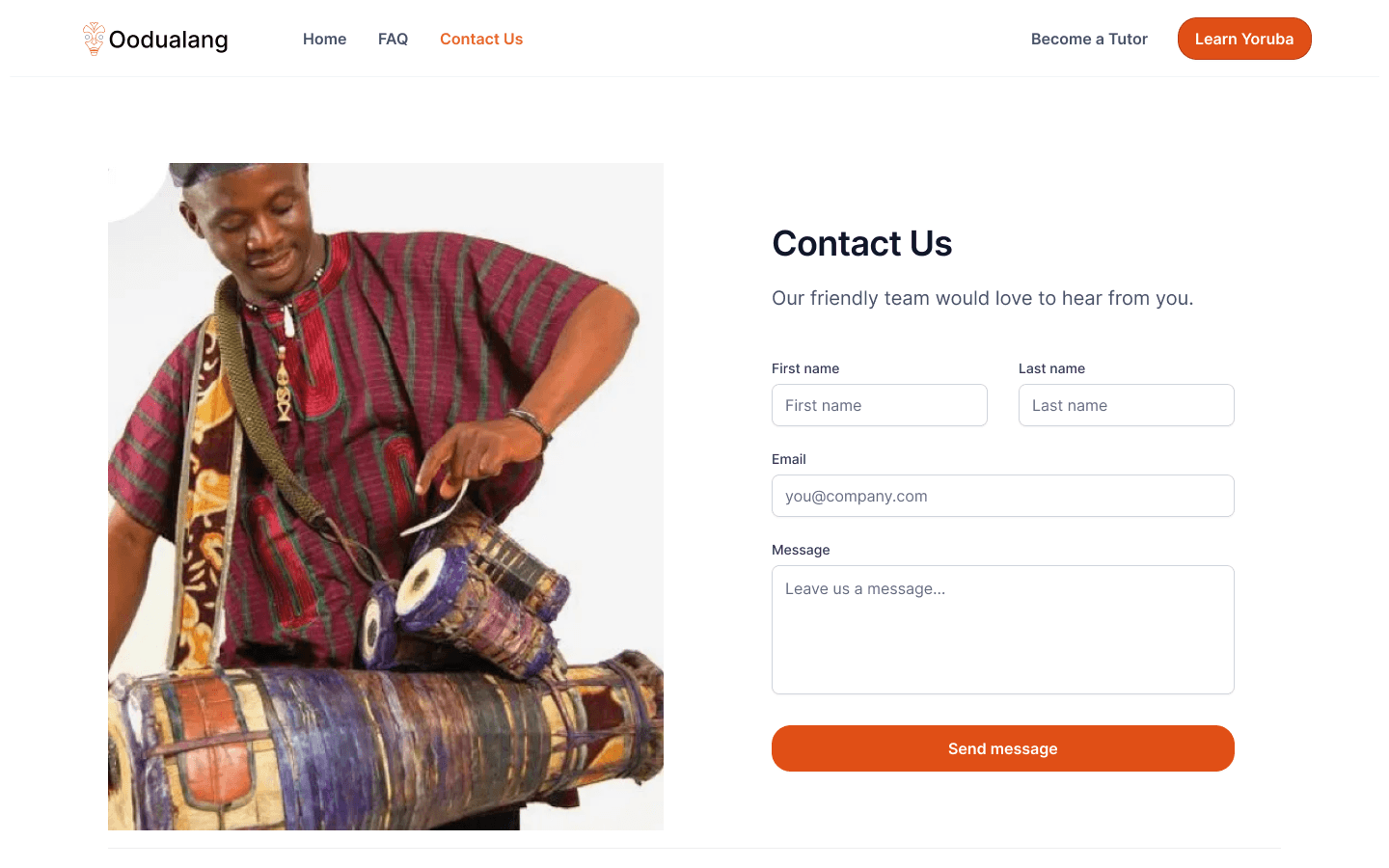
OoduaLang is an online and live learning platform dedicated to teaching the Yoruba language and culture. It connects learners with professional and community tutors through scheduled virtual sessions, cultural resources, and an interactive learning community—making Yoruba language learning accessible to people anywhere in the world.
Role:
Lead Designer
Industry:
EdTech
Duration:
Ongoing
Challenges
Color Balance & Accessibility: Using Pan-African colors (red, black, green, gold) can be visually powerful but challenging to balance. These colors are often bold and high-contrast, which can affect readability, accessibility (WCAG compliance), and long-term usability if not applied thoughtfully.
Cultural Representation Without Overcrowding: Incorporating Yoruba and Pan-African cultural elements (patterns, symbols, Aroko) while maintaining a clean, modern learning interface can be difficult. Overuse may lead to visual clutter and distract users from core learning tasks.
Multi-Role UX Complexity: Designing seamless experiences for different user types (learners, tutors, and admins) within one platform can be challenging, especially when each role has distinct goals, workflows, and dashboards that must still feel part of one cohesive product.
My Approach
Discovery Phase:
I start by aligning with stakeholders to understand the product vision, business goals, and cultural expectations, especially around Pan-African identity. I conduct competitive analysis (e.g., italki-like platforms), define key user personas (learners, tutors, admins), and map user journeys to identify pain points and opportunities.Design & Development Phase:
I translate insights into wireframes and high-fidelity designs, creating role-based flows for learners, tutors, and admins. I establish a design system that balances Pan-African colors with accessibility standards, ensure mobile-first responsiveness, and collaborate closely with developers to maintain design feasibility and consistency.Testing & Iteration Phase:
I validate designs through usability testing and stakeholder reviews, focusing on booking flows, onboarding, and readability. Feedback is used to refine layouts, color usage, and interactions, ensuring the product remains intuitive, culturally authentic, and scalable before and after launch.
Results
The design approach resulted in a culturally authentic and user-friendly learning platform that balances Pan-African visual identity with modern usability standards. Clear role-based flows improved navigation for learners, tutors, and admins, while simplified onboarding and booking experiences reduced friction and increased engagement. Through continuous testing and iteration, the final designs supported accessibility, scalability, and a cohesive brand experience, positioning OoduaLang as a credible and engaging EdTech platform for Yoruba language and cultural learning.
Future Plans
Expand Learning Experiences: Introduce advanced gamification, certifications, and AI-assisted learning tools to improve engagement, personalization, and long-term learner retention.
Grow Community & Reach: Scale the platform to support more African languages, deeper community interactions, and global partnerships to strengthen cultural preservation and international adoption.
Conclusion
OoduaLang is positioned as a meaningful EdTech platform that blends language learning with cultural preservation through thoughtful design and technology. By addressing user needs across learners, tutors, and administrators, and carefully balancing Pan-African visual identity with accessibility and usability, the product delivers a cohesive and engaging experience. With a strong foundation and clear plans for growth, OoduaLang has the potential to scale into a trusted hub for African language education and global cultural connection.